Ci vollero più di due decenni per scoprire l’identità del mostro che infestava il Pacifico Nord-Occidentale. Nel 1982, la vita del detective Dave Reichert stava per cambiare per...
8 Min Read
Ci vollero più di due decenni per scoprire l’identità del mostro che infestava il Pacifico Nord-Occidentale.
Nel 1982, la vita del detective Dave Reichert stava per cambiare per sempre — ma non ne aveva idea fino a quando non si fermò lungo una riva di un fiume.
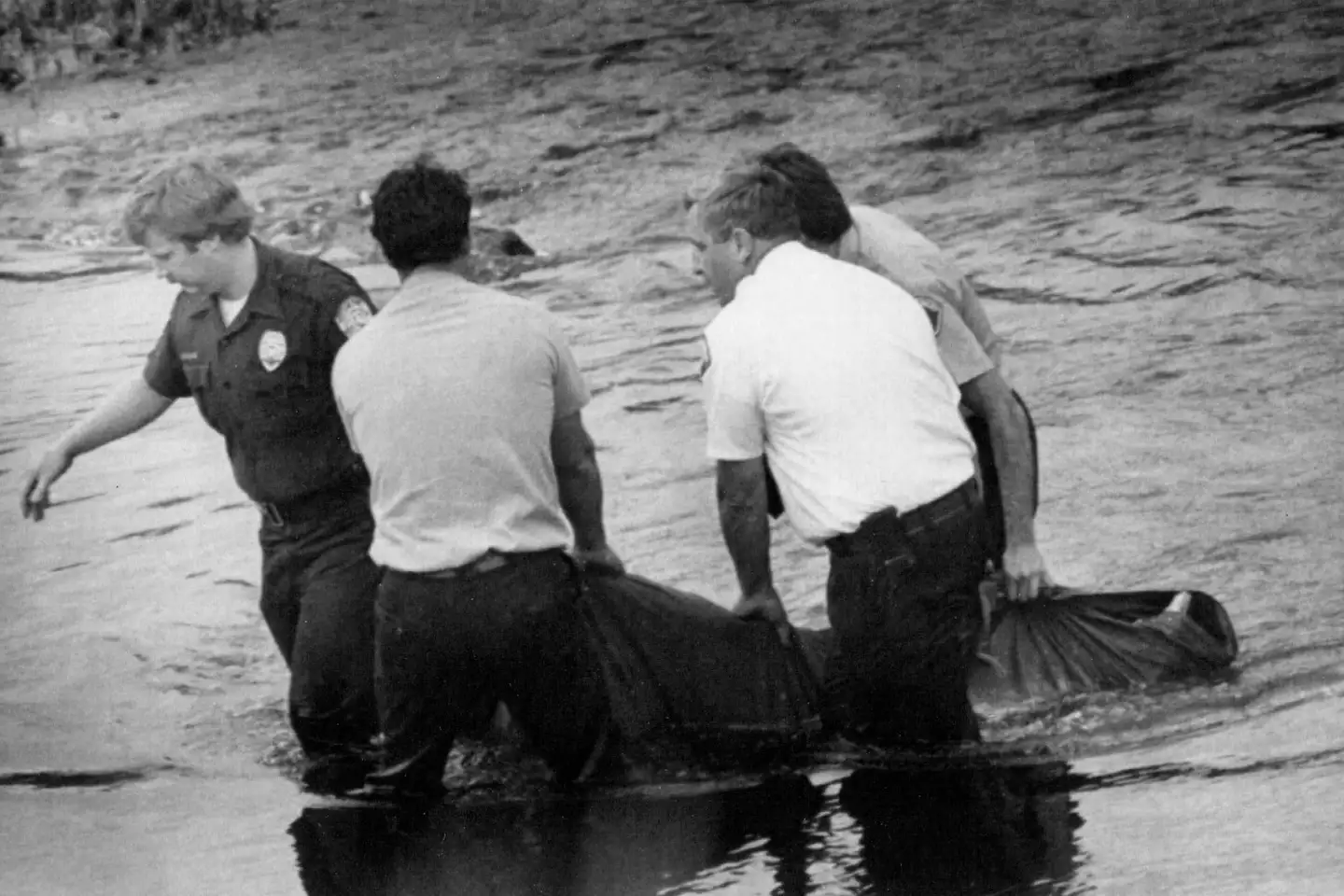
Il detective Reichert stava rispondendo a una chiamata in cui un dipendente di una maccelleria era passato lungo la riva per fumare una sigaretta, e mentre guardava il fiume, vide un corpo.
Pochi giorni dopo, mentre la squadra cercava ancora sulla riva, scoprì altri due corpi poco a monte.
Il detective Reichert ha raccontato a Cold Case Files di A&E com’è stato essere lì quella mattina di agosto:
Marcia Chapman
“Marcia Chapman era sdraiata sulla schiena, e aveva grandi massi sulle alte, sulla spalla superiore, ma un braccio era libero. Poi ricordo che una mano si muoveva mentre la corrente le passava sopra il corpo e il fiume proseguiva a valle. E per me era quasi come se stesse dicendo ‘Eccomi qui! Aiutami!’ Ovviamente, era troppo tardi.
Questa fu l’opera mortale del Green River Killer.
La maggior parte delle sue vittime era giovane, vulnerabile e trascurata dalla società. Molti erano lavoratori del sesso, che camminavano lungo la stessa area di 3-4 miglia chiamata Pacific Highway strip — o semplicemente “the strip”. Guidando in qualsiasi notte, i detective hanno detto che avrebbero contato oltre 100 lavoratrici del sesso.
Ma, poiché queste donne spesso lavoravano da sole, non venivano segnalate come scomparse. Per questo motivo, il dipartimento di polizia non sapeva di avere un serial killer tra le mani finché molte persone non avevano perso la vita — e i loro corpi non erano stati trovati negli stessi boschi o lungo lo stesso fiume.
Nei due anni successivi furono scoperte altre 10 vittime.
“Everytime you turned around, a body was being found,” Det. Reichert told A&E. “We weren’t making progress, we were just continually collecting humans, dead humans.”
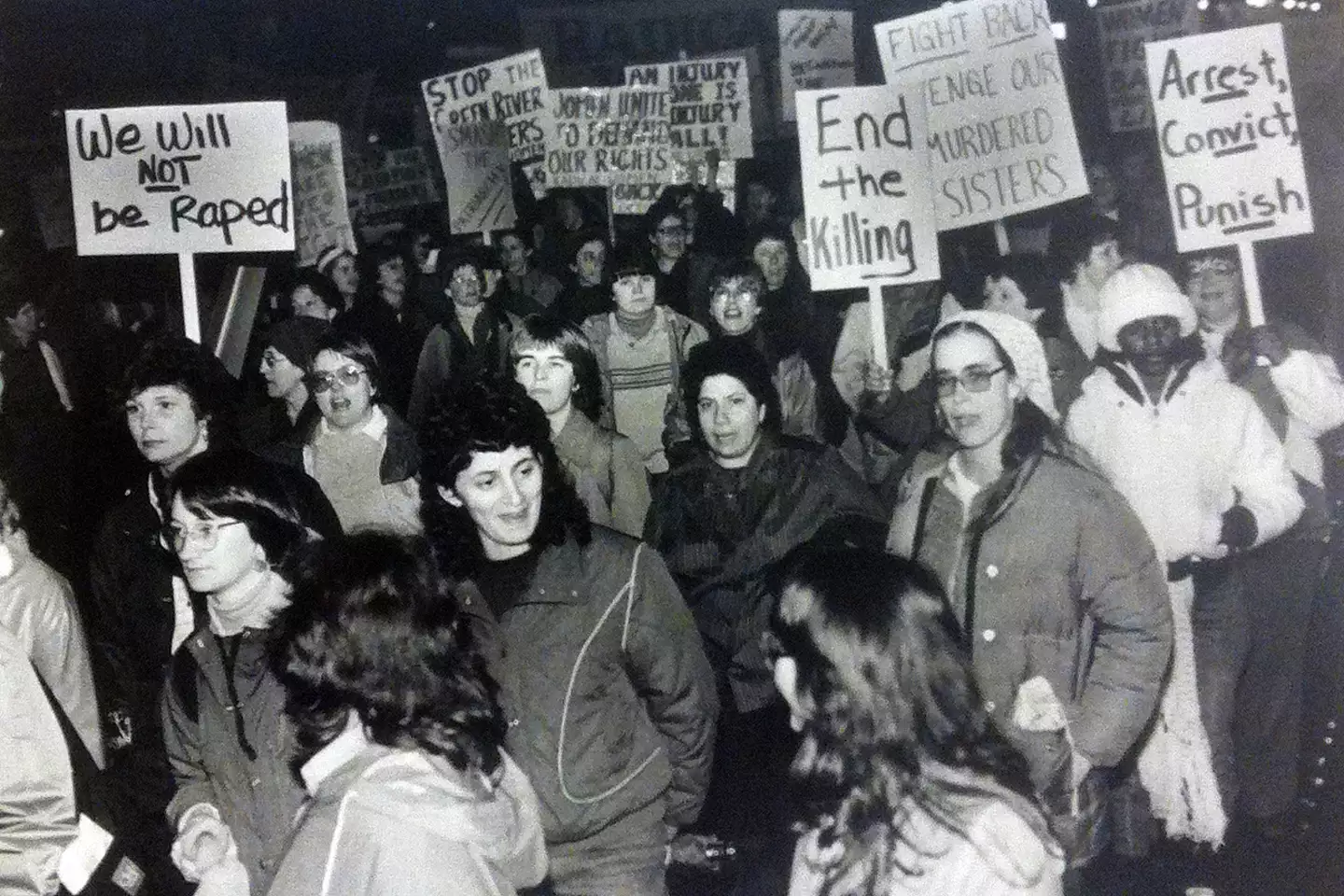
La polizia non aveva piste e il pubblico era sempre più spaventato. Alla fine, si suggerì che si trattasse di un solo colpevole, basandosi sul comportamento dell’assassino.
La maggior parte dei corpi ha raccontato agli investigatori una storia simile.
Una vittima, che era o una fuggitiva o una lavoratrice del sesso, mostrava segni di attività sessuale. La maggior parte delle vittime veniva strangolata, sia con legature che con la forza fisica di qualcuno. I loro corpi venivano spesso trovati in gruppi di “siti di scarico” all’interno della contea di South King. A volte era vicino all’aeroporto internazionale Seattle-Tacoma…
… altre volte era lungo il fiume Green.
Alcuni corpi mostravano anche segni di necrofilia, e di essere stati profanati dopo la loro prematura morte.
I “siti di scarico” fornivano ai detective prove che non sapevano avrebbero raccolto — gomme, sigarette e altri materiali scritti.
Anche con queste prove superflue, i detective stavano perdendo la speranza di catturare il colpevole. Sebbene la maggior parte degli omicidi sia avvenuta tra il 1982 e il 1984, gli agenti di polizia continuavano a camminare su e giù per la striscia, cercando di identificare chi tra i pendolari, i piccoli criminali e i clienti potesse essere il loro mostruoso colpevole.
Una lista di possibili sospetti fu creata nel pieno degli omicidi, ma la tanto necessaria svolta non arrivò mai.
Ad ogni cambio di guardia detective, si perdevano più informazioni, ma i corpi continuavano ad arrivare.
Gli esperti sapevano che qualcosa doveva cambiare.
Il pubblico stava perdendo la pazienza e diventava sempre più spaventato, così l’Ufficio dello Sceriffo della Contea di King istituì nel 1982 la Green River Task Force per indagare sugli omicidi.
Era composto da un gruppo di 25 esperti e agenti delle forze dell’ordine locali, principalmente provenienti dalla contea di King ma anche da Kent e Pierce. Esaminavano a fondo ciò che sapevano per cercare di restringere la lista dei sospetti.
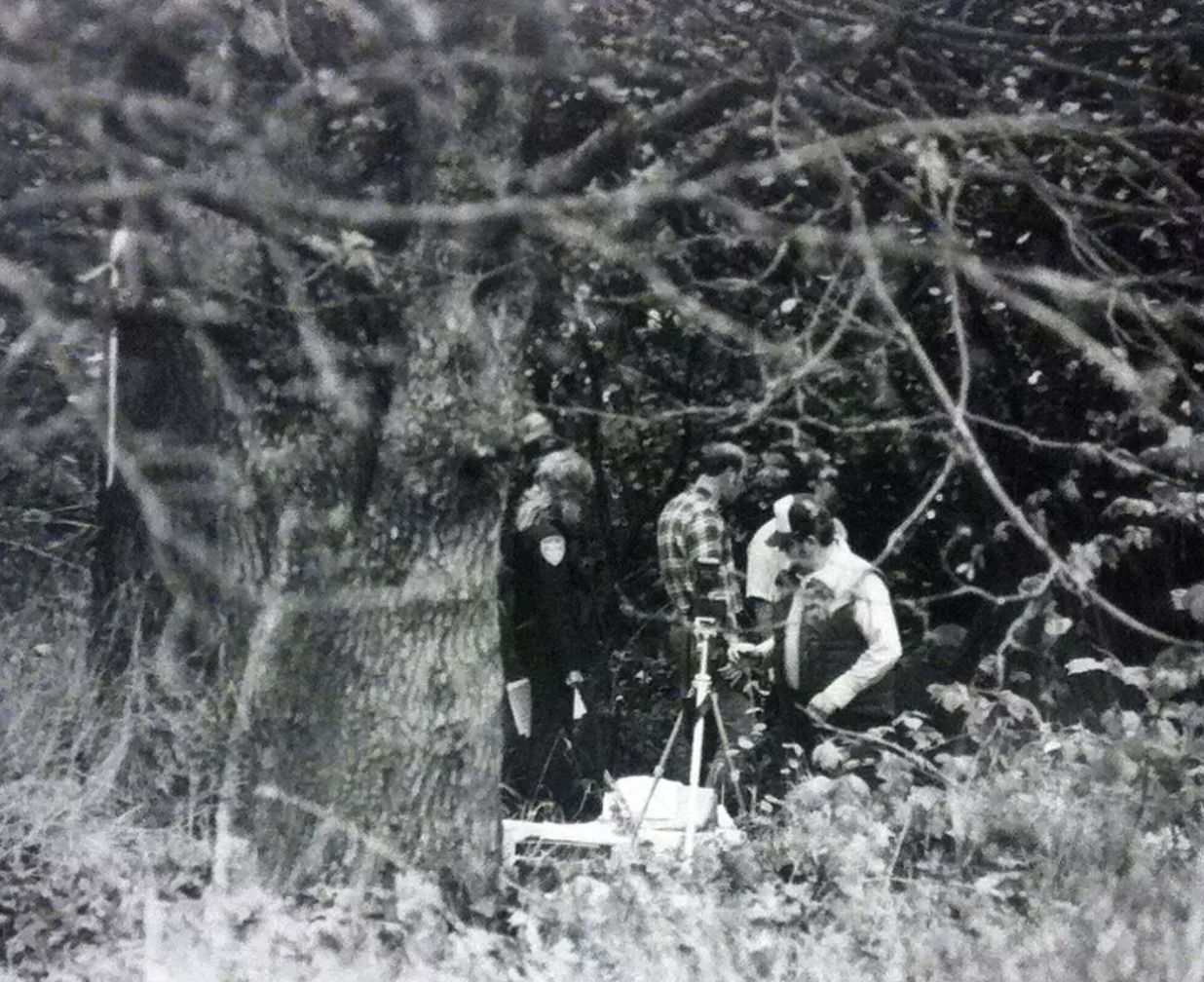
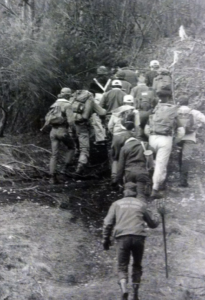
A Green River Task Force member and volunteers from the Explorer Search & Rescue team hike up a ravine towards their search area off South Star Lake Road south of Kent, near Federal Way. Photo filed March 19, 1985 (MOHAI, Seattle Post-Intelligencer Collection, 2000.107)
Improvvisamente, ottennero una svolta nell’ottobre 1984.
Una lettera mozzafiato da un detenuto nel braccio della morte della Florida, il famigerato serial killer Ted Bundy in persona, offriva il suo aiuto per rintracciare l’assassino.
Det. Reichert and another task force member, Robert Keppel, were weary of this self-imposed invitation. Keppel was a detective who had hunted Bundy himself, and Det. Reichert was a seasoned investigator, prepared to be on guard and extra skeptical of Bundy’s thoughts on the case.
The investigators met with Bundy, and were shocked to realize how much effort Bundy had put into the case.
Bundy knew the names of the victims, and had even plotted where they were picked up, and where their bodies were being found. Much of his deductions behind bars were similar to what detectives were also surmising.
Bundy believed the killer weaponized his mild personality to lure the sex workers into a false sense of security. Bundy himself wore an arm cast or used crutches to make targets think he wasn’t a threat. He said this offender would be doing something similar.
It later transpired the Green River Killer did in fact try to present himself as someone who couldn’t be feared, by showing photos of his son to make the women think he was a harmless family man.
Bundy also recommended a new tactic.
“In my opinion,” Bundy said, “the best chance you have of catching this guy red-handed is to get a site with a fresh body and stake it out.’”
He said the Green River Killer would want to revisit the dump sites to have sex with the bodies and relive the crime.
When Det. Reichert asked Bundy if he thought the Green River Killer was done for good or was simply “cooling off,” Bundy laughed.
“[The killer didn’t stop] unless he was born again and filled with the Holy Spirit in a very real way,” Bundy said. “He’s either moved, he’s dead, or he’s doing something very different.”
While staking out crime scenes didn’t ultimately catch the Green River Killer, detectives knew the offender was a necrophile, so his suggestions and insights were sound.
Close Call, Not Enough Evidence
1986, two years after investigators spoke with Bundy, a survivor of an assault from the strip told police about the assailant who attacked and tried to strangle her.
Through the descriptions, the police were able to identify him as Gary Ridgway.
Det. Reichert recalled that Gary’s name came up in a couple of different spots, and so a tip sheet was generated and assigned to Lt. Matt Haney.
Lt. Haney followed that tip sheet line by line, and went to talk to every person and follow up on every lead. By the end of his dogged work, he was convinced that Ridgway was the Green River Killer, so much so that he’s able to get clearance for investigators to tail their prime suspect.
Sure enough, he was still out there on the strip — but that wasn’t enough for probable cause.
In 1987, the detectives executed search warrants to search Ridgway’s house, his locker at work, and his vehicles. They were stunned when they couldn’t find anything that would indicate he was the Green River Killer.
This starts a divide among the Green River Killer Task Force. By the time of the search, at least $10 million had been spent on the effort, including federal grant money. Without real leads, the number of officers began to dwindle exponentially.
Catching Gary Ridgway
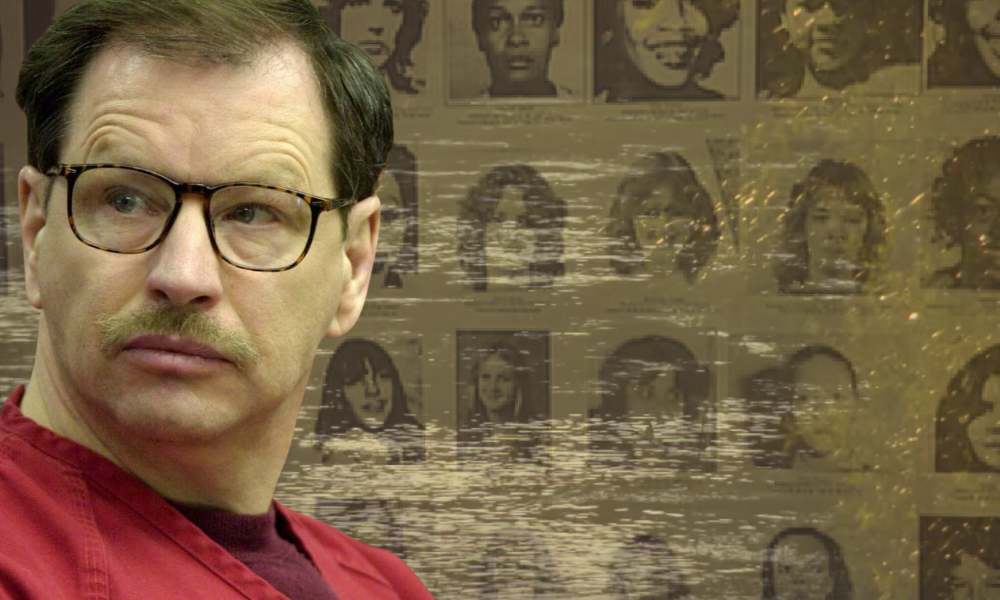
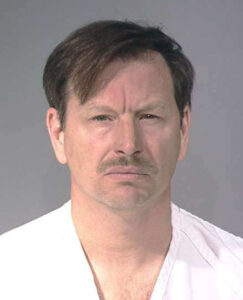
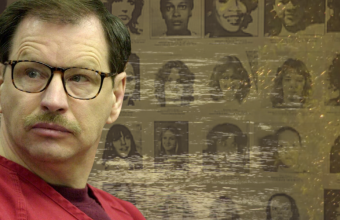
Gary Ridgway mugshot
On November 4, 1997, Det. Reichert is elected to be Sheriff of King County. His first order of business — get DNA testing on evidence from the Green River Killer victims.
Bodily fluids taken from Marcia Chapman, the victim Det. Reichert remembers as the woman who symbolically had her arm waving at him in the river almost as if to ask for help, ultimately had enough DNA on her to tie her murder back to Gary Ridgway.
The Washington State Crime Lab used DNA testing to definitively link Ridgway to three of the Green River murder victims.
Sheriff Reichert ordered new surveillance on him, vowing that this time, they’d catch him. Thankfully, they did.
On November 30, 2001, Ridgway, 52, was being surveilled when he picked up a sex worker on the strip. Officers intervened, and arrested him for the murders of Marcia Chapman, Opal Mills, Cynthia Hinds, and Carol Ann Christensen.
After being arrested, his defense team quickly approached the prosecutors and said that Ridgway would give details to 65 additional murders in exchange for his life. Everyone was in favor of making the deal.
Over the next few years, Ridgway provided details that only the true killer would know on 48 separate murders. Despite his confessions and overwhelming evidence, he remained a remorseless killer.
The Guilty Man Didn’t Come from Mars
On December 21, 2003, Sheriff Reichert decided that he needed to talk to Ridgway one more time before he would plead guilty in court.
From that conversation, he knew that as horrible as it is to say, what separates monsters like Ridgway from people like the rest of us is very little.
“He’s not from outer space,” Reichert says. “He didn’t come from Mars. He came from right here in our community, and that’s the scary part. Right here, in our neighborhood — this little boy grew up to become one of the most notorious killers, not only in this country but I think in this world.”
Ridgway’s guilty plea statement begins as follows:
I killed the 48 women listed in the state’s second amendment information. In most cases, when I murdered these women I did not know their names. Most of the time I killed them the first time I met them, and I did not have a good memory for their faces. I killed so many women I have a hard time keeping them straight. I picked prostitutes as my victims because I thought I could kill as many of them as I wanted without getting caught.
Though we may never fully comprehend his motives, his case is a reminder of the importance of vigilant law enforcement and the exploration of human nature’s deepest, darkest corners.
Ridgway still says there are approximately 30 more bodies still to be found. He is now in his early 70s, and the latest reports say he’s still being held in Washington State Penitentiary, believed to be in an isolated single cell in a restrictive housing unit.
Andrea Cipriano è la Digital Content Specialist di Uncovered, dove scrive per la newsletter di true crime pubblicata due volte a settimana, The Citizen Detective. Andrea si è laureata con un Master of Arts in Psicologia Forense presso il John Jay College of Criminal Justice, dove si è concentrata sulla ricerca e sull’approfondimento della mente criminale. Andrea crede che non sia mai troppo tardi per la giustizia.
Uncovered ha creato una comunità per discussioni riflessive sul true crime, advocacy e ricerche complete sui cold case. Siamo il centro per ricercatori principianti ed esperti, aiutando i membri a sviluppare ulteriormente le loro capacità di detective cittadini. Ti sembra qualcosa che ti interessa? Unisciti alla nostra community. Insieme, possiamo fare la differenza.
Share Article
Previous Post
Angeli della Morte: Infermiere che sono diventate assassine










No Comment! Be the first one.